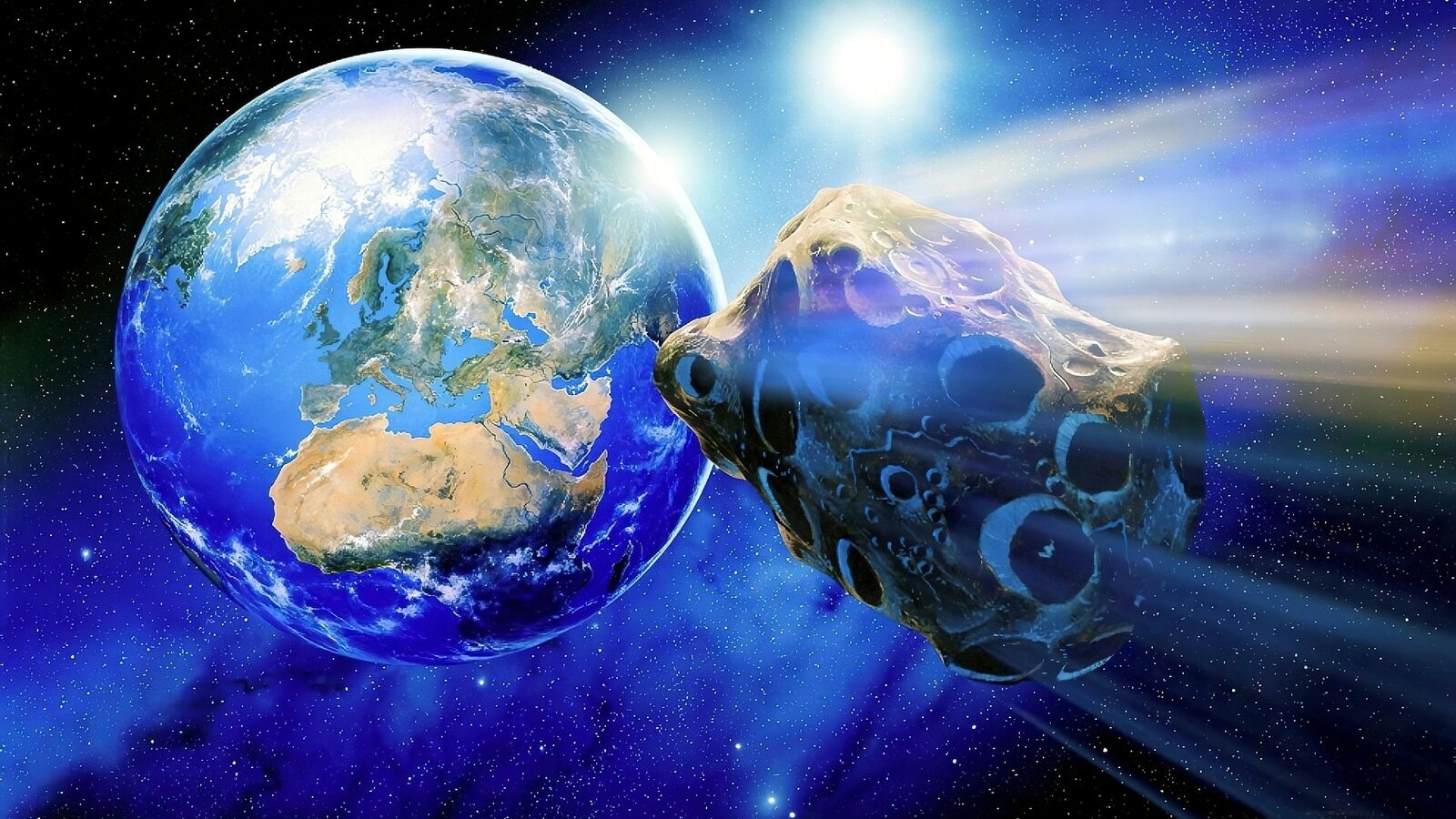
NASA has warned of this dangerous space rock that will come extremely close to Earth today. NASA shared the details of the potential danger it could pose.
Today there is a potentially dangerous rocky visitor that will come extremely close to Earth! While countless asteroids continue to zoom past Earth at astonishing speed, most of them burn up in the atmosphere itself. However, some reach the ground with catastrophic consequences, while others are too small to do any damage. You must have heard of the devastating asteroid impact from the Chicxulub collision that resulted in the mass extinction of most of Earth’s dinosaurs, and many other species, about 66 million years ago.
Now a bus-sized asteroid is on its way to Earth! To calculate the potential threat of an asteroid or near-Earth object (NEO), NASA closely monitors all upcoming asteroids and comets. One such asteroid is 2023 AE1, which has a diameter of 12 meters and is fast approaching Earth.
It’s not size, but the main concern is that it will make a terrifying close approach of only 0.9 million miles to Earth! It’s a concern, as NASA’s Asteroid Watch dashboard says any asteroid approaching within 4.6 million miles, or 7.5 million kilometers, of Earth is known to be a potentially dangerous object. This asteroid moves at a speed of 19932 km per hour. However, the asteroid will not hit Earth and will instead fly back into space. It will come back.
After today, the next close approach to asteroid 2023 AE1 is on January 23, 2032 at a distance of 10.06 million kilometers.
NASA’s plans to protect Earth from asteroids
Last year, NASA successfully tested its Double Asteroid Redirection Test (DART) Mission spacecraft attack on a non-hazardous asteroid called Dimorphos to test planetary defenses. The lessons of this asteroid strike will be used to protect Earth from asteroids headed for a collision with our planet. According to NASA, this is the world’s first mission to deflect an asteroid into space.
How NASA tracks asteroids
Some of NASA’s best technologies help track these dangerous asteroids. NASA uses optical and radio telescopes to determine the size, shape, rotation and physical composition of asteroids. In addition, planetary radar, conducted by NASA’s Deep Space Network radio telescopes and the National Science Foundation’s Arecibo Observatory in Puerto Rico, will enable detailed characterization data of the asteroids.
Source link